
AI That Lives Inside Your Business Processes, Not Alongside Them
Generic AI tools require exporting data, switching context, and hoping the insight makes it back into an actual decision. SAP's Business AI, delivered through BTP, takes a different approach — embedding predictive scenarios and generative AI copilots directly inside the transactions and screens your teams already use.
RPTech helps you identify where AI actually adds value in your SAP landscape, then implements it — from predictive models that flag risk before it happens to generative AI copilots that answer business questions in plain language.
Where AI Adds Real Business Value
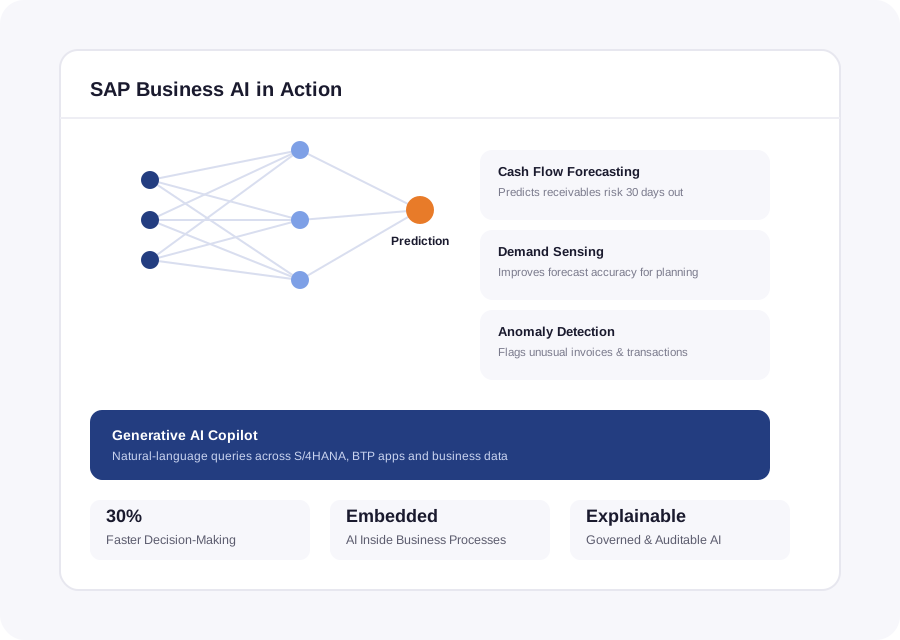
Cash Flow Forecasting
Predicting receivables risk and cash position ahead of time, not after the fact.
Demand Sensing
Improving forecast accuracy for production and inventory planning.
Anomaly Detection
Flagging unusual invoices, transactions or patterns for review before they become issues.
Generative AI Copilot
Natural-language queries across S/4HANA and BTP data — ask a question, get an answer, no report-building required.
Intelligent Document Processing
AI-based extraction from invoices, contracts and forms feeding directly into business processes.
Governed & Explainable AI
Models built with auditability in mind, so predictions can be understood and trusted.
How We Approach AI Adoption
Identify the Use Case
Find the decision or process where prediction genuinely helps.
Validate the Data
Confirm the underlying data is reliable enough to model against.
Build & Embed
Implement the AI scenario directly inside the relevant business process.
Monitor & Refine
Track model performance and adjust as business conditions change.
Frequently Asked Questions
What is SAP Business AI?
It's SAP's approach to embedding both predictive and generative AI capabilities directly into business applications and processes, rather than as a separate standalone tool.
Do we need a data science team to use SAP's AI capabilities?
No — many of SAP's embedded AI scenarios are pre-built and configurable, meaning you don't need an in-house data science team to get started, though custom models can be built for more specific needs.
What is SAP's generative AI copilot?
It's a natural-language assistant embedded across SAP applications, letting users ask business questions in plain language instead of navigating reports or building queries manually.
How is AI accuracy validated before it's trusted?
We validate models against historical outcomes before rollout, and build in explainability so predictions can be understood and audited rather than treated as a black box.